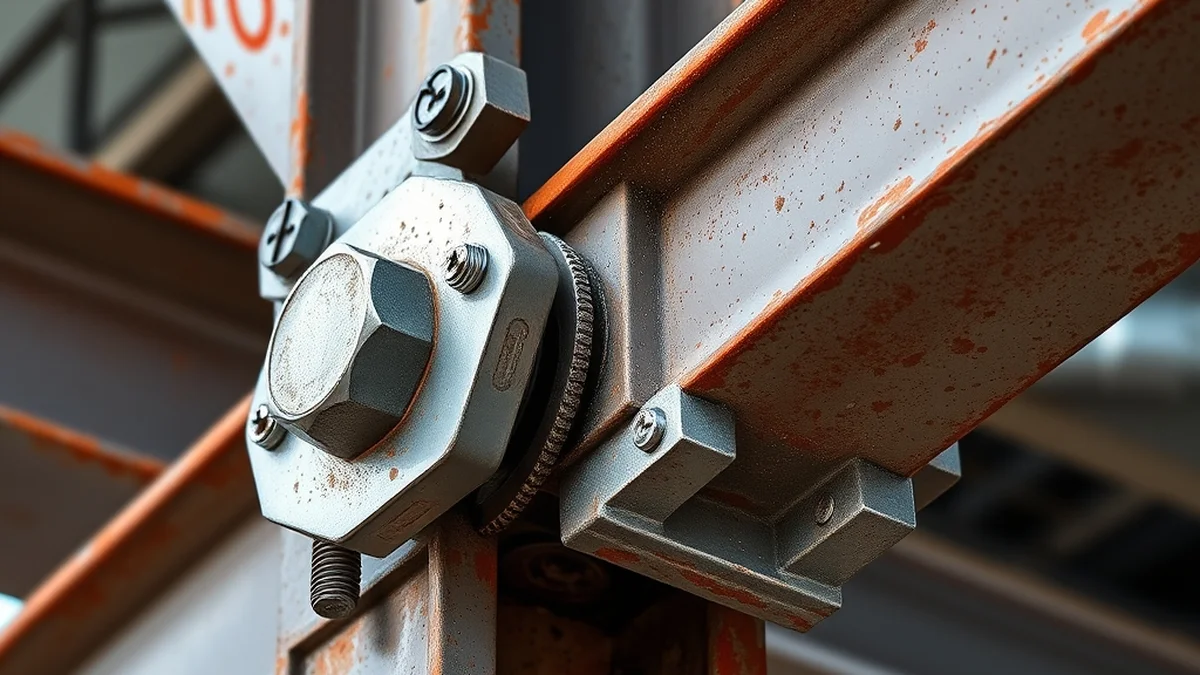
The choice is not determined by assuming bolts are easier or welds are stronger.
1. Select bolting or welding through connection design
The choice is not determined by assuming bolts are easier or welds are stronger. Review the forces, required stiffness, installation access, tolerances, and erection sequence. Simple connections and moment connections require different details. Shop welding with site bolting can be considered where it fits the design.
2. A325 and class 8.8 are different specifications
A325 is now a grade within ASTM F3125. Property class 8.8 belongs to a different ISO classification system. Procurement should identify the approved standard, grade, diameter, length, nuts, washers, and coating condition. The grade alone does not determine whether a joint is snug-tightened, pretensioned, or slip-critical; the designer specifies the joint type.
3. Why there is no universal bolt torque table
Installation torque depends on the bolting assembly and its condition. A fixed torque based only on diameter does not demonstrate correct pretension. Follow the installation and verification procedures of the project-referenced edition. The RCSC standards page notes that the calibrated wrench method was withdrawn in the 2025 edition. Projects referencing another edition must follow their contract documents rather than mix editions.
4. Site welding: procedures, access, and inspection
Where AWS D1.1 is specified, procedure and welder qualifications, joint preparation, inspection, and acceptance follow the project edition. UT, MT, PT, or other examinations are selected for the joint and inspection requirements. Not every weld requires every NDT method, and UT/PT is not the routine verification of bolt pretension.
5. Pre-work discussion checklist
Request connection drawings, bolting assembly specifications or WPS, inspection requirements, and responsibility boundaries. Record revisions before fabrication. Do not substitute bolt grades, weld lengths, holes, or plates simply because materials are available. Retain inspection records and approved changes for handover.
Project questions
Can these details be used directly for any project?
No. Sections, connections, methods, and inspection criteria must follow the project design, specified standard editions, and relevant product data.
Technical references
Technical Journal Exploration
Explore Related Structural Engineering Guides
Deepen your understanding of structural steel standards, precision fabrication methods, and building engineering in Bali.