Agree document deliverables in the scope
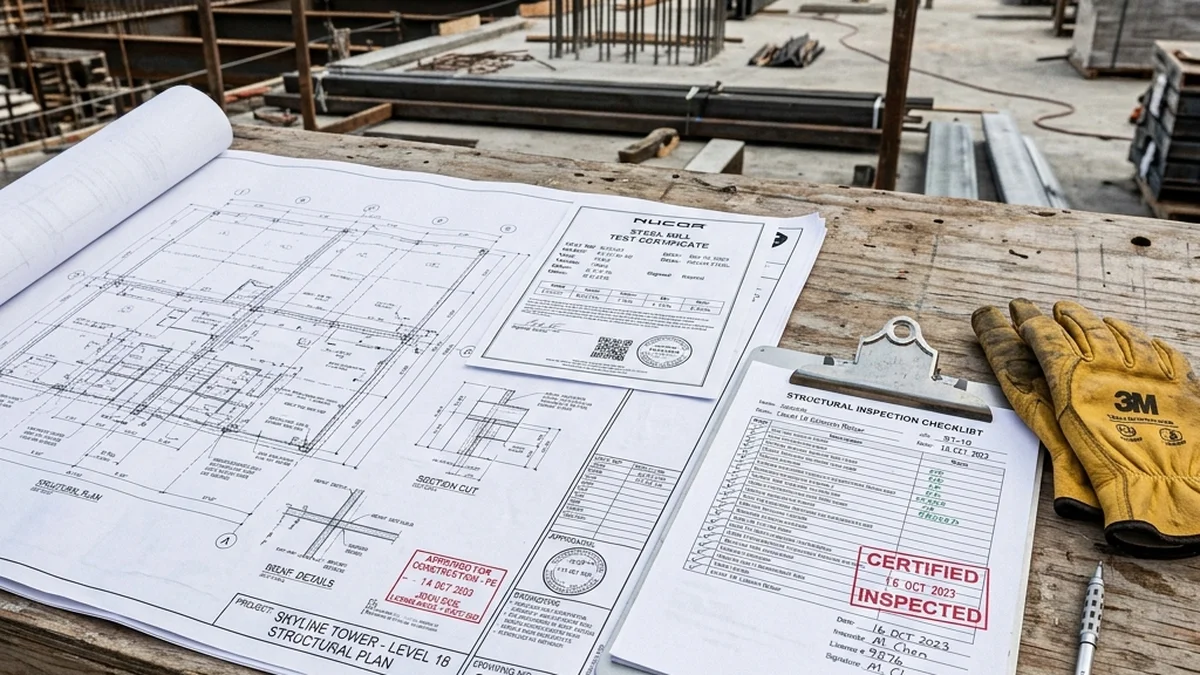
State which documents will be delivered, who prepares them, and expected formats. Distinguish design documents, shop drawings, and construction records. Explain management format needs early to avoid assuming that undiscussed documents are automatically included.
Distinguish initial drawings from final records
Keep revision information so document status is clear. Preliminary discussion drawings may not reflect final conditions. Ask how changes are recorded in deliverables. Request a dated file and revision list, and keep superseded versions out of the final handover folder.
Review inspection records with the responsible party
Ask which inspection records are included and which work they cover. Steel construction involves inspections and coordination of installed results. One document should not be interpreted as approving every building aspect. Ask the issuer or responsible inspector about unfamiliar terms and findings.
Close outstanding work with a clear list
List remaining items by location, description, responsibility, and status, including completion confirmation. Photos need explanatory captions. Avoid vague messages such as untidy finishing, which do not identify the work or when it can be checked.
Pass information to the building manager
Managers need archive locations, contacts, and maintenance guidance, not just owners or construction teams. Discuss coating information and usage limits. When management changes, transfer archives and modification records so building knowledge is retained.
Further reading
Related questions
Key Facts You Should Know.
Does every project receive the same documents?
No. Document lists depend on scope, project requirements, and relevant provisions. Discuss them early.
Why should revised drawings be kept separately?
So managers do not use superseded documents when planning maintenance or building changes.
Technical Journal Exploration
Explore Related Structural Engineering Guides
Deepen your understanding of structural steel standards, precision fabrication methods, and building engineering in Bali.