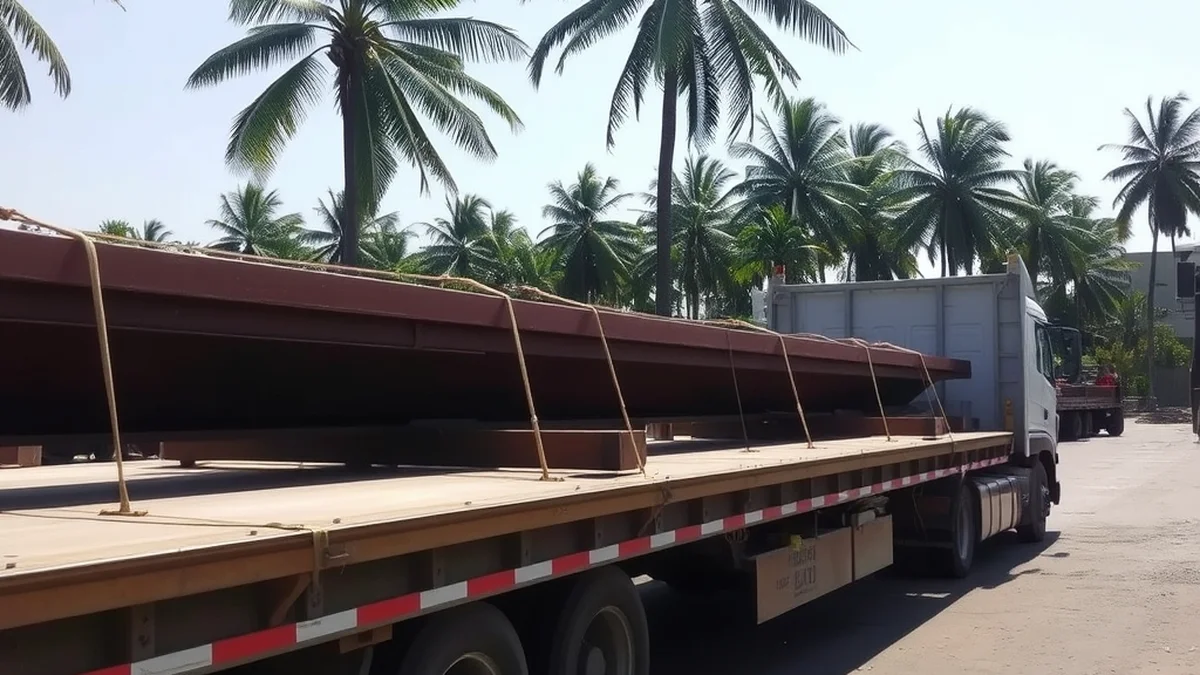
Restricted access may require shorter delivery segments.
1. Modular segments start with access and design
Restricted access may require shorter delivery segments. The designer, fabricator, and transport provider determine their length after reviewing weight, vehicle dimensions, route, unloading space, and lifting equipment. Cutting a beam alone does not establish a workable erection method.
2. Splice locations follow structural analysis
There is no universal rule placing every splice at one-quarter or one-fifth of a span. Force distributions depend on supports, loads, and the frame system. Check axial force, shear, moment, load combinations, and temporary erection stability at the selected splice location.
3. Plates and bolts require calculation
Bolt quantity and size, flange/web plates, edge distances, holes, and weld details are not universal standard dimensions. The joint must provide the designed strength and stiffness. Do not equate Grade A325 with class 8.8 or use member thickness as the sole basis for plate thickness.
4. Trial assembly and erection sequence
Dimensional checks, component identification, and trial fitting can reveal discrepancies before dispatch. The erection plan still needs temporary stability, lifting points, installation sequence, and connection completion procedures. Bolt verification follows the joint type and project standard edition rather than a generic torque value.
5. Information owners should provide
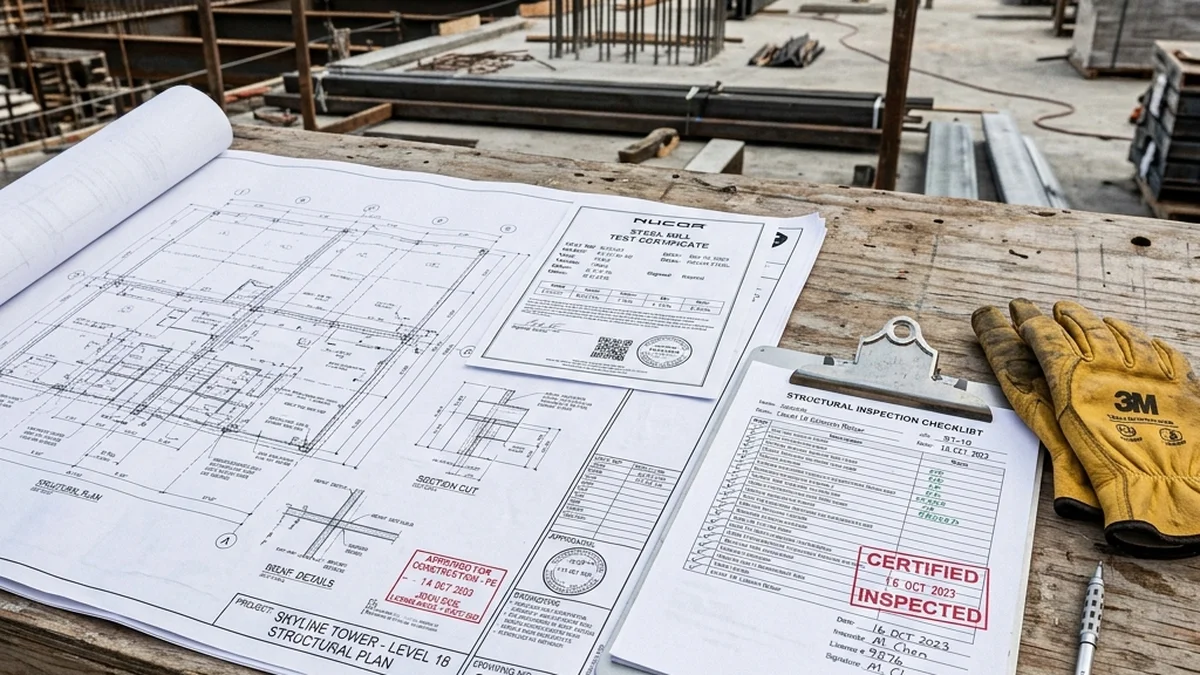
Supply photographs of the route, gate dimensions, bends, cables, unloading areas, and nearby activities. Transport and construction teams assess feasibility against actual conditions. Keep revised drawings and a splice schedule so delivered segments can be traced to their references.
Project questions
Can these details be used directly for any project?
No. Sections, connections, methods, and inspection criteria must follow the project design, specified standard editions, and relevant product data.
Technical references
Technical Journal Exploration
Explore Related Structural Engineering Guides
Deepen your understanding of structural steel standards, precision fabrication methods, and building engineering in Bali.